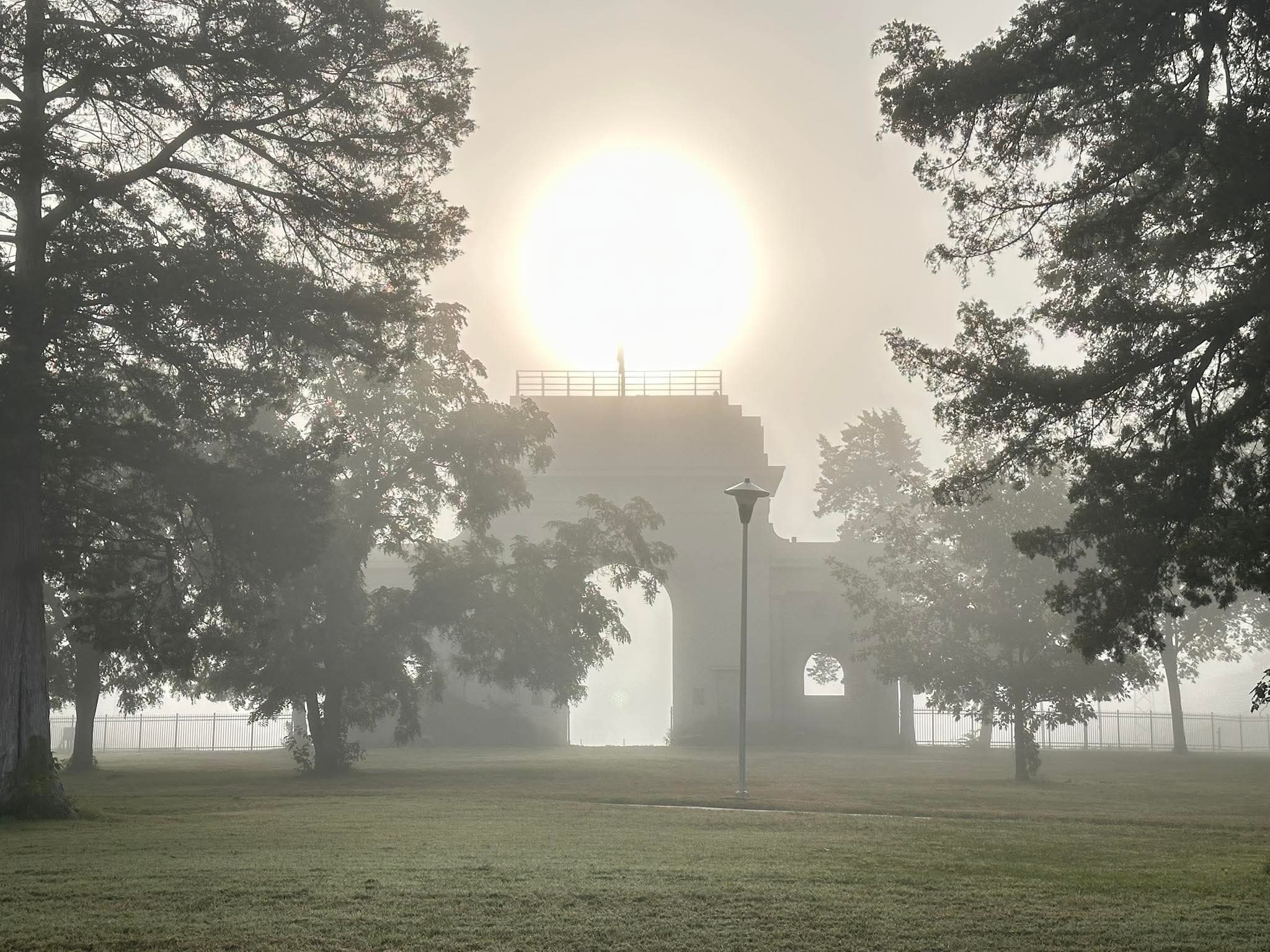
The Department of the Interior Secretary Doug Burgum’s posture toward Haskell Indian Nations University as the 2026 Midterm elections approach is not one of leadership, planning, or fiduciary responsibility. It is a posture of waiting. Burgum has offered no HLC Recovery Plan, no public explanation, and no corrective strategy for the accreditation crisis that the Higher Learning Commission (HLC) formally documented in July 2025. His silence is not benign. In the context of federal trust responsibility, silence is administrative complicity.
Public-Disclosure-Notice-Haskell-Indian-Nations-University.pdf
Secretary Burgum has set up Haskell Indian Nations University to fail to erode Indian Self-Determination and dismantle federal Indian trust responsibility. Secretary Burgum offers the HLC sanction in support of his reasoning to slash Indian education funds and to close Haskell.

The federal government’s fiduciary trust responsibility to Indian nations is not a political variable. It does not pause, weaken, or recalibrate based on electoral strategy. The duty of trustees is a legal standard, not a political preference.
The Supreme Court’s trust doctrine—rooted in the Marshall Trilogy and reaffirmed in Seminole Nation—requires the federal trustee to act solely in the interest of Indian beneficiaries. This duty applies with equal force during election seasons, transitions and administrative uncertainty.
Under federal law and long-standing doctrine, the Secretary of the Interior is the ultimate federal trustee—a guardian to the ward. That role carries uncompromising obligations:
- Loyalty-acting solely for the Indian beneficiaries
- Care-protecting Indian beneficiaries from harm
- Accountability-ensuring safe, transparent management
- Avoidance of self-interest-fiduciary care is not self-preservation
Cherokee Nation v. Georgia | 30 U.S. 1 (1831) | U.S. Supreme Court
A guardian must protect the ward “from all danger, even at a cost to his own interest”. This is the standard Burgum is legally bound to meet. First Nations Journal asserts that Secretary Burgum has not met this standard at Haskell Indian Nations University.
Students and faculty at Haskell have endured conditions that no educational community should face. They have been “whip-sawed” between instability, neglect, and silence from the federal trustee. The resulting trauma is not theoretical-it is lived, Dailly, and documented. The federal trustee’s silence during institutional harm is not neutrality, it is complicity:
- Failure to provide safe conditions
- Failure to ensure competent leadership
- Failure to protect accreditation
- Failure to maintain campus and Haskell wetlands
- Failure to uphold treaty-based educational obligations
Each failure is a breach of fiduciary duty.
The Higher Learning Commission’s core requirement is unambiguous. Institutions must provide a safe and healthy environment for education. HLC’s sanction against Haskell is not merely an accreditation issue-it is evidence of federal trustee breach. The HLC sanction documents:
- Negligence
- Non-compliance
- Institutional instability
- Failure to meet basic educational standards
These HLC findings align with the legal definition of fiduciary breach under federal trust doctrine.
Under HLC Criterion 5 (Institutional Effectiveness, Resources, and Planning) institutions must demonstrate:
- An institution must have a real, functioning budget
- That budget must be adequate to sustain operations
- Governance must be capable of managing and executing that budget
- Financial instability is grounds for sanction or withdrawal of accreditation
For a state chartered or privately governed institution, these requirements fall on the institution’s board and administration. For Haskell Indian Nations University, they fall on the Department of the Interior, because Haskell has no independent budgeting authority.
Secretary Burgum’s FY2027 proposal to slash one-third of the BIE budget is not merely a policy choice-it is a direct assault on HLC’s core standard of financial sustainability and is the “death knell” for closure of Haskell.
Senator Moran’s findings in support of the Haskell Indian Nations University Improvement Act provide congressional confirmation of what FNJ has long documented. Federal mismanagement of Haskell is real, ongoing, and harmful. Senator Moran’s findings reinforce:
- The seriousness of HLC’s sanction
- The systemic nature of federal neglect
- The need for statutory correction
- The urgency of trustee accountability
Congress has now placed the Haskell accreditation crisis squarely in public record.
Haskell’s institutional conditions are not merely troubled; it is dire and worsening each day. The absence of an HLC Recovery plan means no corrective trajectory exists. The absence of an approved FY2027 budget means no financial foundation exists. The absence of federal oversight means no accountability exists. These three absences form a downward spiral that compounds daily:
- Accreditation risk increases because HLC’s sanction requires documental progress, which DOI has not produced.
- Deferred maintenance worsens, creating unsafe facilities and environmental hazards
- that violate trustees’ fiduciary duty to protect student beneficiaries
- Operational uncertainty expands, as Haskell functions without a budget, without
- Appropriations guidance, and without any public explanation of how funds are being used.
What monies are being used to operate Haskell? Haskell Indian Nations University is the only higher education institution in the United States operating without an approved budget. This is indefensible. Without an approved FY2027 budget, without congressional appropriations guidance, and without any public DOI explanation, stakeholders-including tribal nations, students, faculty, and the public-have no visibility into:
- What funds are being drawn down
- Under what authority
- Under what internal controls
- Under what fiduciary justification
These unanswered questions are the “turning of the blind eye” expressed by Representative Tracey Mann (R-KAN) in the federal mismanagement at Haskell.
Haskell Indian Nations University enters the 2026-2027 academic year under the weight of two converging national truths: minority-serving institutions are chronically underfunded, and the federal government’s failure to meet its trustee obligations has placed Native and Black students at disproportionate risk.
Haskell’s crisis is part of a broader national pattern. Students, alumni, and faculty of the historically Black and land-grant university Lincoln University have filed a lawsuit in U.S. District court claiming inequality. The federal government’s breach of trust pattern at Haskell is similarly situated as in the complaint filed by Lincoln University Black Americans.
Lincoln University alumni, students sue Missouri seeking $549 million – St. Louis American
Haskell, Tribal colleges, and HBCU’s-carry academic missions that teach authentic history, economics, social, political, and moral issues grounded in the lived experiences of their communities. These missions are not supplemental; they are essential to the nation’s democratic health. When federal trustees fail to uphold equal rights in education, they weaken the intellectual infrastructure of the entire country.
Silence from federal leadership is complicity. FNJ asserts that authentic cultural history and quality education are necessary to light the way for our Seventh Generation, just as our ancestors did before us. The future of Haskell is not merely an accreditation question-it is a test of whether the United States will honor its commitments to Native students and uphold equal educational rights for all minority communities.
First Nations Journal has a civic and moral obligation to fight against injustice and indifference. Congress is in the dark of Indian federal trust and treaty obligation, and it is the duty and responsibility for FNJ to educate and inform lawmakers of the unique relationship between the Indian nations and the United States. FNJ will continue to document and will not stand by passively.
A Congress Call to Action is requested.
FIRST NATIONS JOURNAL

M’gwitch, 🪶
Steve Cadue
Kickapoo
Leave a Reply