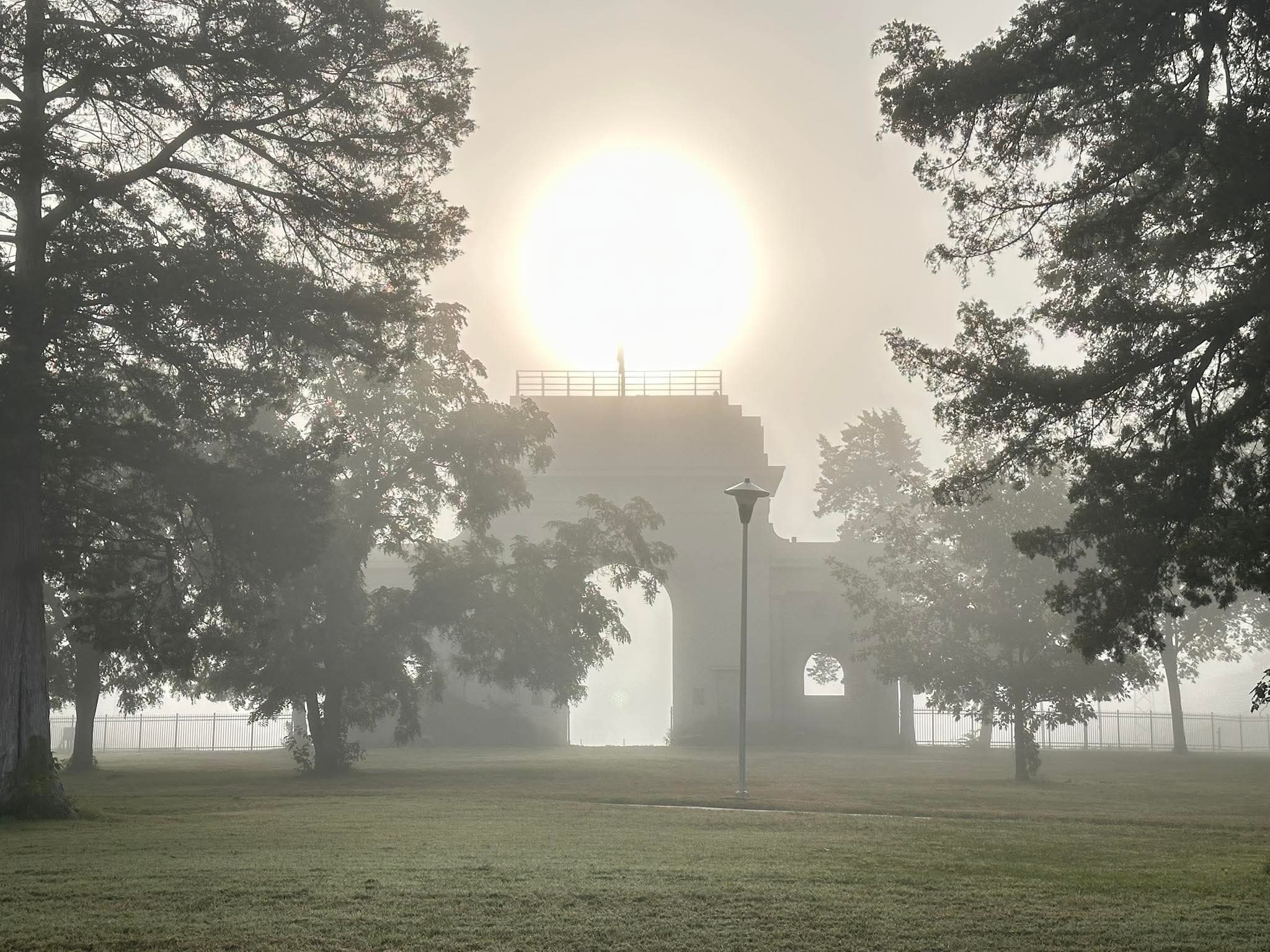
Congress’ prolonged inaction has allowed Haskell Indian Nations University to begin the 2026-2027 academic year under Higher Learning Commission (HLC) sanction, severe dysfunction, and unsafe facility conditions, leaving students exposed to institutional risk without disclosure. A Caveat Emptor warning is now a fiduciary necessity.
Public-Disclosure-Notice-Haskell-Indian-Nations-University.pdf
The federal government’s inertia toward Haskell has now produced measurable and dangerous consequences. As Congress advance short-term measures to avert a national shutdown, it continues to ignore the acute crisis at Haskell—a crisis formally documented by the HLC’s sanction and compounded by years of deferred maintenance, unsafe facilities, and environmental hazards. Haskell begins the 2026-2927 academic year not in stability, but in HLC sanction and severe dysfunction with no federal remediation plan in place. The deferred maintenance remediation requires MEP (mechanical, electrical, plumbing) systems, roofing, and structural frameworks.
First Nations Journal reports the evidence and indifference of Haskell fiduciary trustee mismanagement is clear that it is a foregone conclusion the HLC will withdraw accreditation at Haskell in their December 2026 decision. Indians pay the price.
The Office of Inspector General’s 2024 evaluation confirms what Native communities, school leaders, and First Nations Journal have documented for years. Indian Affairs cannot effectively manage deferred maintenance at Bureau of Indian Education (BIE) school facilities, and the resulting deterioration places Native students and staff at ongoing health and safety risk. The OIG; s findings are unequivocal—the federal trustee’s systems, data, and management practices are structurally incapable of meeting even basic facility obligations. These failures mirror conditions documented in federal Merriam reports dating back to the 1928 Report, demonstrating a century long pattern of neglect.
This OIG report reinforces FNJ’s central argument: the federal trustees have known about these failures for decades and has repeatedly chosen not to correct them. Native communities continue to bear the consequences. Indians pay the price.
Congress has been provided clear evidence of institutional failure at Haskell. The Department of the Interior’s inaction directly harms Haskell’s students—the beneficiaries whom federal trustees are legally obligated to protect. Deferred maintenance has left Haskell with unsafe facilities environmental hazards, and deteriorated infrastructure that fail to meet basic health and safety standards.
Given the severity of the HJLC sanction, the risk of accreditation withdrawal, and the unsafe physical conditions on campus, Haskell students; current and the general public should receive a formal Caveat Emptor warning. Students have the right to know that the institution they are enrolling in is under sanction, may lose accreditation and may close. They have the right to know that facilities are unsafe due to decades of deferred maintenance. They have the right to know that Congress has been provided the evidence of fiduciary failure and has not acted.

Haskell Indian Nations University is a federal government university under the ultimate fiduciary federal trusteeship of Department of the Interior (DOI) Secretary Doug Burgum. The public now sees a widening pattern of federal mismanagement, concealment, and trustee failure surrounding Secretary Burgum. The public now sees what Indian Country has experienced for years. U. S. Attorney for D. C., Jeanine Pirro called Secretary Burgum an “incompetent liar” unintentionally exposed a truth long familiar to Tribal Nations. Burgum’s leadership is marked by avoidance, opacity, and a disregard for fiduciary duty.
First Nations Journal has documented—from delayed tribal consolations to unexplained budget reversals—has pointed to the same root cause; DOI, BIA, BIE trustees who governs Haskell through improvisation rather than institutional stewardship.
The DOI is in administrative Freefall. Interior employees—career civil servants, trust obligation specialists, and regional program managers—have been signaling for months that Burgum’s leadership style is not merely abrasive but operationally destabilizing. FNJ’s reporting has captured the same recurring themes:
- Erratic decision cycles that have bureaus without clear direction
- Unilateral overrides of long-standing procedures, often without consultation
- Unresolved conflicts between Burgum’s political appointees and career staff,
- Producing paralysis in Indian Affairs, BIE, and land management units
These are not personality clashes. They are structural failures.
Inside Jeanine Pirro’s hour-long Trump showdown with heated confrontation and accusations
Secretary Burgum has kept Congress in the dark about Haskell’s deteriorating conditions. He has withheld critical information about Higher Learning Commission (HLC) accreditation risk, leadership failures, and campus neglect. Secretary Burgum’s duty is a High Bar, rooted in the Marshall Trilogy and reaffirmed in Seminole Nation. These cases require:
- Loyalty to Indian Beneficiaries
- Care and prudence in managing trust property
- Full accountability to Congress and Tribal Nations
- Avoidance of deception or concealment
These are not optional. They are minimum standards for any Trustee.
The Congress expects—and requires—federal agencies to disclose material risks in their budget submissions. Accreditation loss is not merely a risk; it is an existential threat. If Haskell loses accreditation, federal financial aid ceases, degrees lose recognition, and the institution’s ability to operate collapses. The Secretary’s DOI budget presentation was the appropriate venue for:
- A detailed explanation of the HLC sanction
- A federal plan to ameliorate the accreditation crisis
- A commitment to structural reform
- A request for congressional support to stabilize the Haskell institution
None of these were provided.
The omission is not accidental. It reflects a long-running pattern: DOI, BIA and BIE have consistently minimized or concealed the severity of Haskell’s governance failures. FNJ has documented this pattern for months and the HLC sanction now stands as the accreditor’s independent confirmation of what tribal nations, alumni, and congressional oversight hearings have already established.
Federal DOI mismanagement at Haskell is documented in the Higher Learning Commission’s sanction placed on Haskell and such neglect is cited in the Haskell Indian Nations University Improvement Act (S.2140/H.R. 4085).
The Secretary’s Department of the Interior FY2027 budget presentation to Congress should have been the moment when the federal trustee finally confronted the accreditation crisis consuming Haskell Indian Nations University. Instead, Secretary Burgum delivered a budget narrative that ignored the Higher Learning Commission’s “Accredited on Notice” sanction entirely—a silence so profound so structurally revealing, that it now stands as a one of the most consequential omissions’ in the federal management history of Haskell.
The HLC sanction is not a procedural footnote. It is not a campus level administrative matter. It is the greatest crisis ever faced in the whole history of Haskell, a formal declaration by the regional accreditor that Haskell is at risk of losing accreditation due to federal governance failures. When a university is placed “On Notice” the accreditor is signaling that the institution’s ability to continue operating as a degree-granting institution is in jeopardy. For Haskell, a trust university held in trust by the United States, this warning carries national implications.
The HLC sanction is monumental because it is the first time in Haskell’s 140-year history that the accreditor has formally declared that the institution may not survive under its current federal governance structure. This is not a warning about isolated deficiencies; it is a warning about systemic federal mismanagement. The accreditor’s findings are clear;
- Haskell lacks stable leadership
Haskell lacks functional governance - Haskell lacks financial planning capacity
- Haskell lacks structural accountability mechanisms
- DOI oversight has failed to meet accreditation standards
These are federal failures–not campus failures. They are failures of the trustee, not the Indian beneficiaries.
The Senate Committee on Indian Affairs (SCIA) must treat the HLC sanction as a formal call to action. The accreditor has placed the crisis squarely in Congress’s hands. The federal trustee has demonstrated that it cannot repair the institution. The DOI FY2027 budget presentation confirmed that DOI will not voluntarily confront the crisis.
Senator Lisa Murkowski (R-AK), SCIA Chairperson, recently pushed to force the release of $41,3 million in long-delayed federal grants for Alaska Native education offers a clear example of how congressional oversight can correct federal inaction that harms Native students. By publicly pressing the Department of Education to dislodge funds owed to Tribes, tribal organizations, and Native-serving school districts, Murkowski reaffirmed that treaty and trust-based obligations are not optional—they are enforceable responsibilities requiring active congressional intervention when agencies fail to perform. Her stance directly parallels the situation facing Haskell Indian Nations Univerfsity, where FNJ has requested similar intervention to address federal delays, accreditation risks, and unmet statutory duties. Senator Murkowski’s actions demonstrate that when federal agencies stall, Congress can and must step in to uphold trust responsibility and protect Native learners from institutional harm.
First Nations Journal presses a Congress Call to Action as only Congress can save Haskell from closure and must urgently intervene and commit to uphold treaties and trust responsibility to Indian beneficiaries.
FIRST NATIONS JOURNAL

M’gwitch, 🪶
Steve Cadue
Kickapoo
Leave a Reply